 Join Our WhatsApp Channel

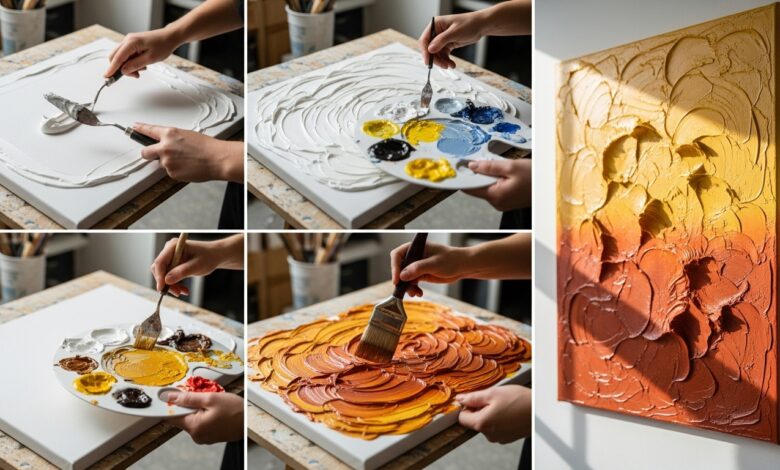
Ever notice how the most expensive abstract art pieces have incredible, tactile texture? At HUBGH, we’re peeling back the curtain on this luxury look. You don’t need fancy sculpting tools or pricey modeling paste; you can create stunning, dimensional canvas art using a secret, budget-friendly ingredient from the hardware store: Joint Compound (or Drywall Mud)! This is the perfect project for beginners to achieve a sophisticated, minimalist, 3D abstract aesthetic with ease.
The Secret Weapon: Materials & Prep
Joint compound is a game-changer—it’s cheap, spreads easily, and dries hard, making it ideal for large-scale texture.
- The Canvas: A small or medium-sized stretched canvas. Eco Tip: Check thrift stores for old, ugly framed paintings—you can often buy them for cheap, prime over the art, and use the canvas and frame for this project!
- The Texture: Ready-mixed Joint Compound (found in the drywall aisle).
- The Color: Acrylic Craft Paint (white, black, or a neutral like warm grey or terracotta).
- The Tools: A Putty Knife or Palette Knife (for spreading), a small cup, and a stirring stick.
Simple Steps for a Sculptural Finish
Step 1: Prep the Canvas and Mix the Paste
- Prime (Optional): If your canvas is not white, give it a quick coat of white acrylic paint or primer and let it dry.
- Color the Compound: Scoop a generous amount of joint compound into a mixing cup. Add a small squeeze of your desired acrylic paint color (e.g., warm grey or pure white). Mix thoroughly. Note: You can skip this step and paint the color on top later, but mixing it in now ensures color is present even if the top layer wears down.
Step 2: Apply the Base Texture
- Spread: Scoop a dollop of the paste onto your canvas. Use the putty knife or palette knife to spread the compound across the entire surface of the canvas. Aim for a thickness no greater than 1/4 inch, or it may crack upon drying.
- Create Movement: Move the knife across the canvas in sweeping, deliberate strokes—diagonal, horizontal, or curved—to establish a sense of movement. Don’t aim for perfect smoothness; the knife marks are the art!
Step 3: Sculpt the Focal Texture (The Design)
While the compound is still wet, you can add focal texture.
- Scrape/Comb: Use the edge of your putty knife or the end of a wooden stick/skewer to drag lines through the wet paste. You can create sharp, geometric lines, repeating waves, or a half-arch pattern.
- Dab/Peak: For a rougher, abstract look, use the tip of the putty knife to lightly dab or press into the paste, pulling up gently to create small, soft peaks of texture.
Step 4: Cure and Finish
- Dry: Let the canvas dry completely—this can take 24 to 48 hours, depending on the thickness and humidity. The compound will lighten in color and harden significantly.
- Final Color (Optional): If you desire a different color or a more cohesive look, paint a final layer of acrylic paint over the entire dried piece (the texture beneath will still be visible).
- Frame (Optional): For a high-end look, frame your finished canvas in a simple DIY floating frame made from thin wood strips (like pine trim) painted matte black.
Why You’ll Love This Project
Affordability: Joint compound is incredibly inexpensive, allowing you to create large-scale, luxury-look art for a fraction of the price of store-bought textured paintings.
Therapeutic Value: The process of sculpting and smoothing the paste is tactile, meditative, and a wonderful way to express abstract ideas without the pressure of traditional drawing.
Modern Design: The finished piece is a minimalist, sculptural accent that adds crucial, coveted texture to a room, instantly giving your space a sophisticated, custom-designed feel.
Grab your putty knife and start sculpting your first abstract masterpiece! Try this project and tag HUBGH to share your creation!
